Why Willpower Isn't Enough: How to Reprogram Your Subconscious Mind
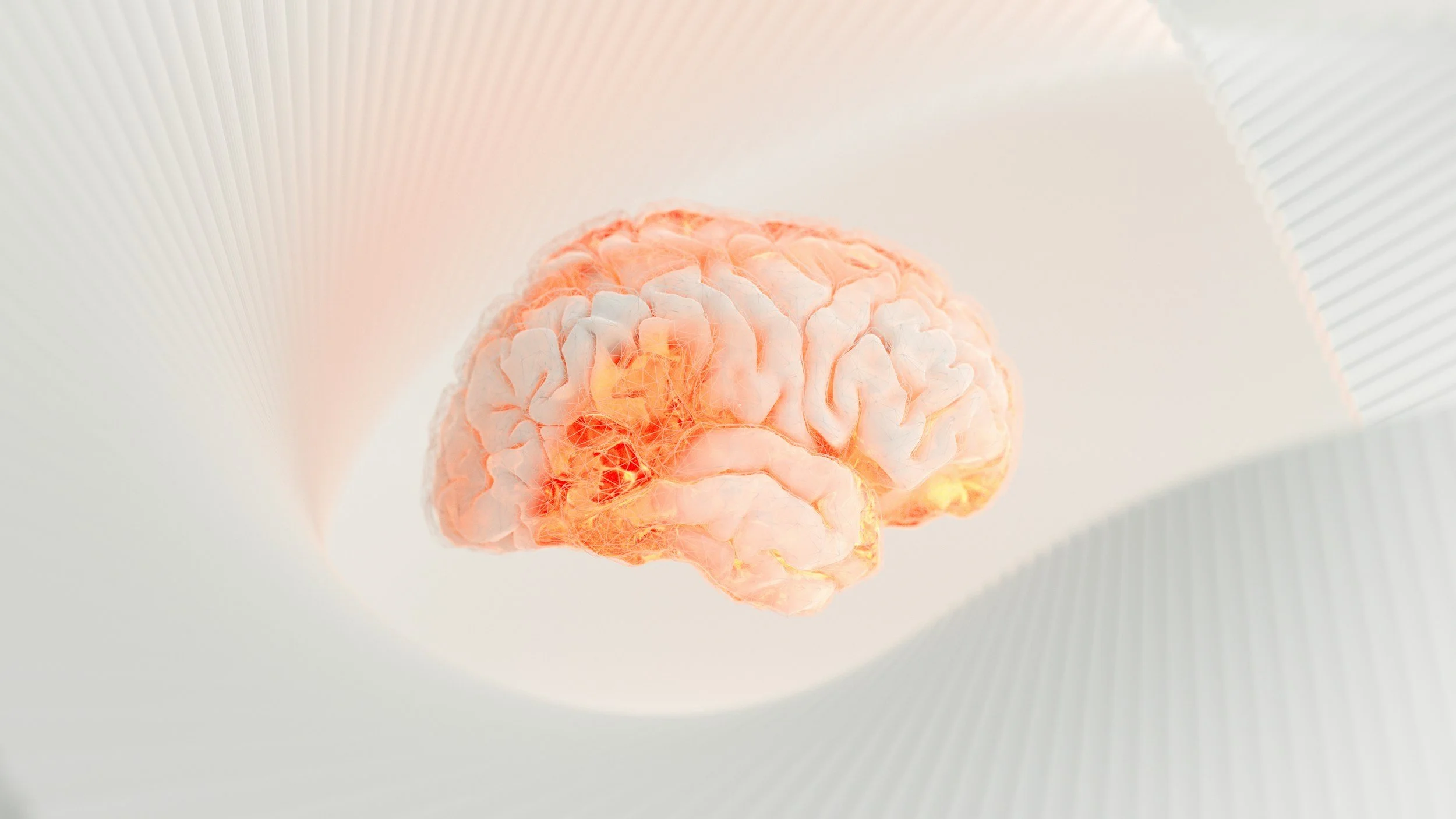
You've set the intention. You've felt the motivation. Maybe you've even made a solid plan. And yet, somehow, you end up right back where you started, caught in the same patterns, reactions, and loops.
This isn't a failure of willpower. It's the predictable result of a 95-to-5 imbalance you probably didn't know you were up against.
The 95% You're Not Aware Of
By the age of 35, roughly 95% of who we are, how we react, what we feel, how we show up, is running on autopilot from the depths of the subconscious mind. Every morning, the "play" button gets hit on a set of memorized habits and patterns, and we respond to new circumstances in the same old ways.
That leaves just 5% to conscious choice.
This is why motivation alone rarely creates lasting change. That 5% of conscious intent is up against a deeply entrenched 95% that is brilliantly designed to keep you exactly as you are. As Dr. Bruce Lipton writes in The Biology of Belief:
"When it comes to sheer neurological processing abilities, the subconscious mind is more than a million times more powerful than the conscious mind."
Think of the mind like a computer. It can only run the software it's been given. You can intend to run a new program all you want, but without downloading the actual software, nothing changes. The subconscious is the operating system, and most of us are still running code that was written in early childhood.
How the Subconscious Gets Programmed
Early Childhood
Much of what lives in the subconscious was installed before the age of eight, when children spend much of their time in slower, more hypnotic brainwave states (i.e., theta and alpha) that make them highly receptive to suggestion. The wounds and unmet needs from those years don't disappear as we grow up; they go underground, shaping our adult behavior in ways we rarely recognize, especially under stress.
Ancestral Lineage
Programming isn't only personal. Patterns woven into our DNA through our ancestral lineage also lay the groundwork for who we become and how we respond to the world.
The Attachments That Follow
Both of these early layers form the foundation for a lifetime of collected attachments, beliefs, identities, roles, and stories that act as filters over our consciousness. The more attachments we accumulate, the more our perception gets filtered through the past.
Cognitive neuroscientists have confirmed this: subconscious beliefs operate like a mental filter, allowing information that confirms them to pass through while blocking contradictory data. This is why limiting beliefs are so stubbornly self-perpetuating, even when they're clearly irrational.
The Staggering Power of the Subconscious Mind
As we know from brain imaging studies, neurons that fire together wire together.
This is especially true when it comes to the subconscious mind. The thing to remember is that the subconscious mind is entirely undiscerning. It accepts whatever makes its way into it without question. And there are essentially two main routes for new information to reach the subconscious: direct access in certain brainwave states (early childhood) and conscious repetition.
Once the subconscious receives information—in the form of a story, a belief, etc.—it accepts it as true. Then, it gets to work on ensuring that we continue to act, behave, think, and feel in ways that maintain that story, belief, etc.
The job of the subconscious is to be a loyal, faithful, and dedicated belief and story repeater and habit matcher. It assumes that if a story or belief made it through to it, it's true. So it will do whatever is then necessary to align our habits, thoughts, and feelings to match that story or belief. And it won't dare question the information that it's received. Again, that's not its job. Its job is strictly to inspire us to act, think, and feel in ways that match the stories it's been told.
The subconscious isn't bad—it's absolutely brilliant. And it's damn good at doing it's job. So good, in fact, that it will keep us looping in the same old limiting beliefs and outgrown stories of our childhood until the day we die if we don't re-program it to do otherwise.
subconscious reality vs. conscious intention
Because the subconscious mind dictates 95% of our thoughts, behaviors, feelings, habits, beliefs, etc., what goes into it will inevitably come back out. In other words, garbage in, garbage out. Or on the flip-side, gold in, gold out.
As it turns out, we aren't who we are by conscious intention. We are who we are because that's who we've subconsciously memorized ourselves to be.
In other words, our ability to create the life we consciously desire to create isn't so much a reflection of willpower or motivation; it's a reflection of how closely our subconscious programming matches our conscious intentions.
If our subconscious programming supports our conscious desires, then we'll find ourselves feeling, thinking, and acting in ways that align us ever more closely to the life we've aspired to create. However, if our subconscious programing is a mismatch to our conscious desires, then we'll continue to feel, think, and act in ways that keep us distanced from the outer reality that we hope to create.
This is because our subconscious programming will write over and 'autocorrect' our conscious intentions by reverting our actions, thoughts, and feelings to its memorized baseline. This is why it’s so difficult to step beyond the perimeters of our limiting beliefs.
Although this looks and feels like self-sabotage, the subconscious is just doing its job to replicate feelings, thoughts, and behaviors that match the stories and scripts it's been programmed with.
Dr. Bruce Lipton summarizes this point succinctly in his book The Biology of Belief (p. 122), stating:
“Since subconscious programs operate without the necessity of observation or control by the conscious mind, we are completely unaware that our subconscious minds are making our everyday decisions. Our lives are essentially a printout of our subconscious programs, behaviors that were fundamentally acquired from others (our parents, family, and community) before we were six years old… a majority of these developmental programs are limiting and disempowering.”
All of this to say that our subconscious programming will override our best efforts to act, behave, think, and feel in new ways until we reprogram it to do otherwise.
Who are we really?
As it turns out, we're far more a product of our subconscious programming than our conscious desires, motivations, well-laid plans, and best intentions.
That is until we open the door to the subconscious and begin to rewrite the very stories that have long defined us.
The subconscious mind is the most powerful tool we have for manifesting the life we desire but the default programming most of us have is faulty, disempowering, and self-defeating at best. Again, the subconscious mind isn't the problem—it's the old, outmoded, fear-based, survival-based programming that's the problem.
Because it keeps us cycling in the thoughts, feelings, and behaviors that allow our old stories to survive yet completely sabotage our ability to thrive and to intentionally create a life we love.
This tired, survival-driven programming has led far too many of us to become human doings of fear-based habit rather than human beings of heart-led choice.
But we have the power to flip the script and radically transform our lives.
To change our habitual ways of being, we can't start at the level of the outcome (thoughts, actions, feelings, behaviors). We have start at the level of the informing stories, beliefs, and historical patterns—we have to start at the level of the subconscious.
Because it's the soil for everything we create. And it's our subconscious programming that in-forms the outer reality (linear time-space continuum) we perceive in this world as well.
So we better make that subconscious programming match what we consciously intend to create in our lives. Otherwise, we'll be grinding against the gears of our subconscious and blaming ourselves all the while. It's not our fault, it's just our programming.
Because when we change the subconscious story of 'I', we change our life.
The Subconscious Isn't the Problem, its Programming Is
Here's the crucial distinction: the subconscious mind is not your enemy. It's extraordinarily brilliant. Its job is to be a loyal, faithful belief-repeater and habit-matcher. If a story made it through into the subconscious, the subconscious accepts it as true and gets to work aligning your thoughts, feelings, and behaviors to match it.
The problem is that the original programming, the code installed in childhood to help us survive, often becomes the very thing that keeps us from thriving as adults.
When survival-based programming stays in place beyond its usefulness, we find ourselves:
Knowing better but failing to do better
Procrastinating on habits we genuinely want to build (like meditation)
Reverting to self-destructive patterns we consciously want to release (like drinking)
Feeling inexplicably stuck despite real motivation to change
What looks like self-sabotage is actually the subconscious doing its job perfectly. It's just working from an outdated story.
The Two Kinds of Mind
Understanding the difference between the habitual mind and the intentional mind helps clarify what we're working toward.
The Habitual Mind is oriented to survive. It's reactive, defensive, and constantly filtering present experience through the lens of the past. It operates from scarcity, limitation, and fear. As Yung Pueblo writes in Lighter, "Left to its old patterns, the mind will continue its reactivity and keep you functioning on autopilot."
The Intentional Mind (what Dr. Joe Dispenza calls the "quantum mind") is oriented to thrive. It's present, creative, expansive, and aligned to values rather than to old wounds. It responds to the moment rather than reacting from memory. It has the inner spaciousness to pause and choose.
These two states exist on a spectrum, and the work of subconscious reprogramming is the work of gradually shifting from one state of mind toward the other.
How to Actually Reprogram the Subconscious
Because the subconscious can only be deeply reached in certain brainwave states, specifically Alpha and Theta, real reprogramming requires more than positive thinking. Here's an overview of the process:
Step 1: Commit and Know What You're Up Against
This work is not for the faint of heart. Changing deep subconscious patterns means going against the grain of nearly everything the subconscious has memorized about you. Bob Proctor puts it plainly: "Changing your paradigm takes a committed decision, because it goes in the opposite direction of nearly everything we've been taught."
Step 2: Bring Your Limiting Stories Into the Light
Before you can rewrite the script, you have to know what it says. Ask yourself: What stories do I tell about who I am and what I'm allowed to have or be? What qualities do I judge in others? (What we reject in others is almost always what we've rejected in ourselves.)
Common limiting belief themes include:
I'm not worthy of [x].
I must please others to be loved.
Once people really know me, they won't accept me.
Bad things always happen to me.
I'll always be [poor / shy / broken / etc.].
Step 3: Shift Your Brainwave State
The most effective reprogramming happens in Alpha and Theta brainwave states, which allow direct access to the subconscious. You can shift into these states through:
Meditation—mindfulness, non-directive, or somatic body-scan practices
Breathwork—try a 4-8-16-4 breath pattern or the 7/11 method (inhale for 7, exhale for 11)
Autogenic training—a self-hypnosis technique used by Olympic athletes and NASA astronauts
Binaural beats or isochronic tones—audio frequencies that guide the brain into coherent, relaxed states
Shamanic drumming—repetitive rhythms that naturally induce trance-like Theta states
Step 4: Neutrally Witness the Roots
From a meditative state, gently revisit the memories or experiences where limiting stories first took root, not to re-live them, but to observe them from a compassionate distance, as if watching a film. This process creates space between you and the story, and often opens the door to integration and release.
Step 5: Install New, Empowering Beliefs
Once old programming has been observed and softened, you can begin to consciously install new beliefs, ones that reflect your actual values and your innate wholeness.
The tools for this include:
Hypnotherapy—particularly methods like Rapid Transformational Therapy (RTT), which combines hypnosis with CBT and NLP to reach the deepest subconscious terrain
EFT (Emotional Freedom Technique / Tapping)—an evidence-based method that neutralizes the emotional charge of limiting beliefs by combining acupressure with cognitive exposure. Studies show up to a 40% reduction in anxiety in a single session, with 76% of participants experiencing full remission in clinical trials.
Visualization—because the subconscious cannot distinguish between vividly imagining and actually experiencing, immersive visualization is a powerful way to begin encoding new neural pathways
NLP (Neuro-Linguistic Programming)—identifying and upgrading the disempowering language patterns we use about ourselves
Step 6: Affirm, Re-Affirm, and Repeat
Repetition is how the subconscious first got programmed, and it's how it gets reprogrammed. But there's one critical ingredient that makes all the difference: feeling.
The subconscious doesn't understand words. It understands emotions, feelings, and impressions. When you write, speak, or listen to affirmations, the goal isn't to recite them like a grocery list; it's to feel the truth of them in your body right now. Combine them with mirror work for added depth (i.e., look into your own eyes and speak to yourself directly).
A Note on Self-Love as the Foundation
Here's the quiet irony at the heart of all of this: one of the most common barriers to doing this work is a subconscious belief that you're not worthy of it.
If you've started this kind of inner work before and found yourself slipping back into avoidance, that's not weakness. That's the subconscious running its usual program. The antidote isn't more discipline. It's recognizing what's happening with compassion, and then choosing, with whatever conscious will you have in that moment, to do the work anyway.
Not because you feel motivated. But because it's a radical act of self-love.
As Joe Dispenza puts it: "If you want to create change, you have to do it from a level of energy that is greater than guilt, greater than pain, greater than fear."
Reprogramming the subconscious is, at its core, the process of learning to come home to yourself. And here's what makes that worthwhile far beyond the individual: as energetic beings, the frequency we carry ripples outward. What you do for yourself, you ultimately do for the collective.
Change the subconscious story of I, and you change your life. Change your life, and you change the world around you, one ripple at a time.
Ready to go deeper? Book a free 30-minute breakthrough consultation today.
